PublishedJuly 1, 2026 in Stories

SEO vs AEO: What's the Difference (And Why You Need Both)
templeajuzie
Administrator
10
You've spent years optimizing for Google. Keywords, backlinks, meta descriptions, the whole playbook.
Then one day you realize people aren't just Googling things anymore. They're asking ChatGPT, Perplexity, and Gemini instead. And your website is nowhere in those answers.
That's the moment most business owners discover a new acronym: AEO, or Answer Engine Optimization.
So what's actually different between SEO and AEO? Do you need to choose one? Or are they two halves of the same growth strategy?
Let's break it down in plain English, no jargon, no fluff.
What Is SEO?
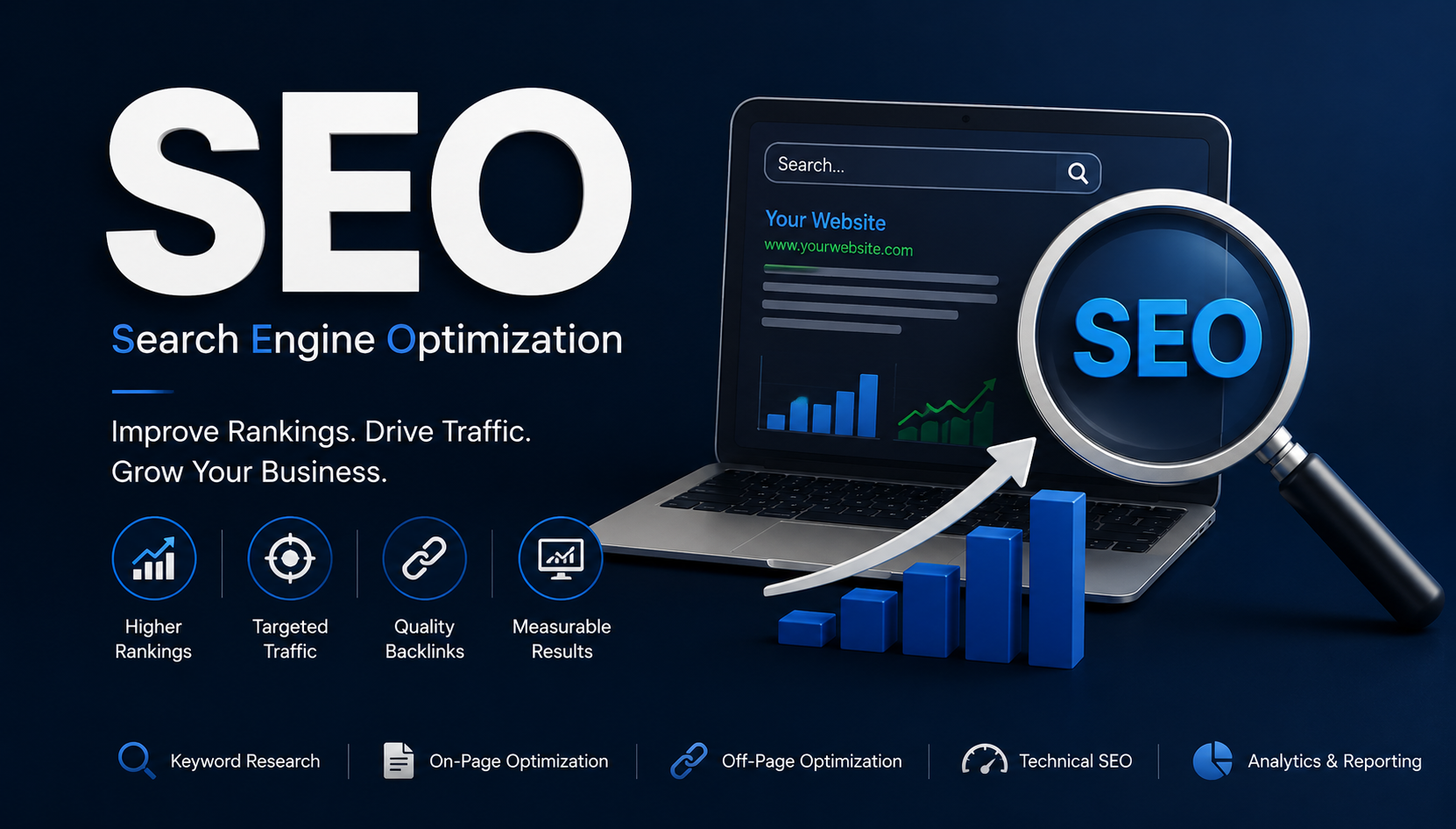
SEO stands for Search Engine Optimization. It's the practice of optimizing your website so it ranks higher on search engines like Google and Bing.
The goal of SEO is simple: show up on page one when someone searches a relevant keyword, then earn the click.
Traditional SEO relies on:
Keyword research and placement
Backlinks from authoritative sites
Page speed and technical performance
On-page structure (headings, meta tags, alt text)
Content depth and freshness
SEO has been the backbone of digital visibility for over two decades. If you wanted traffic, you optimized for the blue links.
What Is AEO?
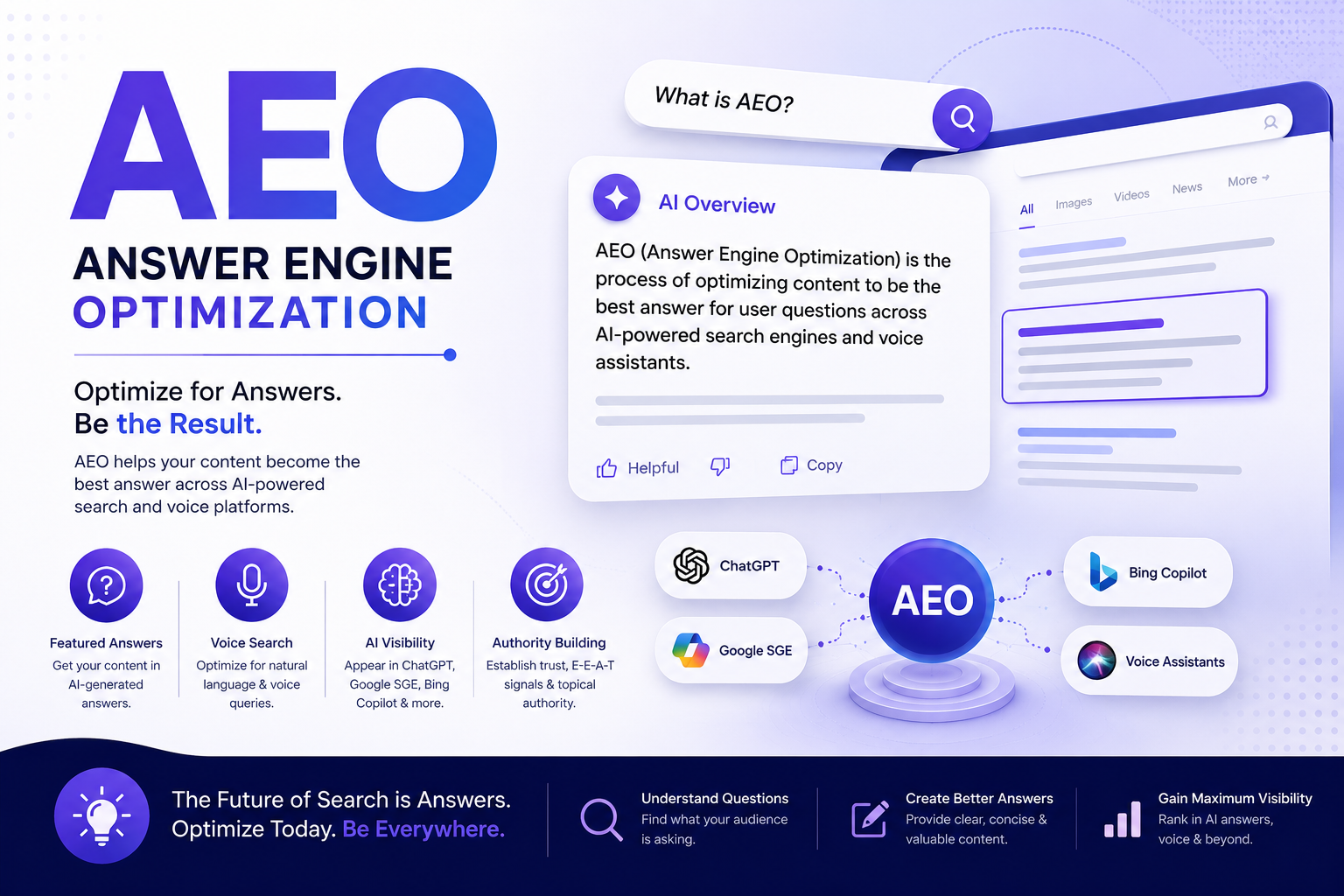
AEO stands for Answer Engine Optimization. It's the practice of optimizing your content so AI systems like ChatGPT, Perplexity, Gemini, and Claude can understand it, trust it, and quote it directly in their answers.
Instead of competing for a spot on a results page, you're competing to become the source an AI model cites when someone asks a question.
Here's the core difference in one sentence: SEO gets you clicked, AEO gets you quoted.
AEO relies on:
Clear, direct answers placed early in the content
Structured formatting (lists, tables, definitions)
Content that reads naturally, not stuffed with keywords
Topical authority across an entire subject, not just one page
Machine-readable structure that AI crawlers can parse easily
If someone asks an AI assistant "what's the best marketing automation tool for startups," AEO is what determines whether your brand gets mentioned in the response.
SEO vs AEO: The Real Differences
FactorSEOAEOGoalRank on search engine results pagesGet cited inside AI-generated answersPrimary audienceHuman searchers scanning a list of linksAI models scanning for direct answersSuccess metricClick-through rate, rankings, trafficCitations, mentions, AI visibilityContent styleKeyword-optimized, link-drivenAnswer-first, structured, definitionalPlatformsGoogle, BingChatGPT, Perplexity, Gemini, Claude, Google's AI Overviews
Notice these aren't competing systems. They actually feed each other. Google's own AI Overviews pull from well-structured, authoritative web content, the same content that ranks well organically.
This is why the smartest brands right now aren't choosing between SEO and AEO. They're building content that satisfies both at once.
Why AEO Matters More Every Month
Search behavior is shifting fast. More people are asking AI tools questions directly instead of typing keywords into Google and clicking through five tabs.
That means the old model of "rank high, get the click" is no longer the full picture. Now there's a second battlefield: getting your brand mentioned inside the answer itself, sometimes with zero click required.
For small businesses, creators, and lean marketing teams, this is actually an opportunity. AEO rewards clear, useful, well-structured content over sheer domain authority.
A smaller brand with sharp, well-organized answers can outrank a bigger competitor inside an AI response, even if it couldn't outrank them on Google.
This is exactly the kind of shift that makes marketing automation valuable. Producing content consistently, structured correctly for both humans and AI systems, is hard to do manually at scale. Platforms like https://www.trygenit.com are built for this exact moment, helping businesses create and publish content that's optimized for search engines and answer engines without needing a full content team.
How to Optimize for Both SEO and AEO
You don't need two separate content strategies. You need one strategy built with both systems in mind.
1. Answer the question in the first two sentences. Both Google and AI models reward content that gets to the point fast. Save the storytelling for after the answer, not before it.
2. Structure content with headers, lists, and tables. AI systems extract information more easily when it's broken into digestible chunks, not buried in long paragraphs.
3. Build topical depth, not just single pages. AEO favors sites that cover a topic comprehensively. One great article helps. Ten connected articles on the same theme help a lot more.
4. Keep technical SEO fundamentals strong. Fast load times, clean site structure, and proper metadata still matter. AEO doesn't replace technical SEO, it builds on top of it.
5. Stay consistent. Publishing once and disappearing for three months hurts both strategies. Regular, structured content signals authority to search engines and AI crawlers alike.
If keeping up with that consistency feels like a full-time job on top of your actual job, you're not wrong. It is one. That's exactly why more marketing teams are automating the repetitive parts, content planning, publishing schedules, and cross-channel distribution, so the strategy doesn't fall apart the moment things get busy. You can see how that looks in practice at https://www.trygenit.com/blog.
Common Mistakes Businesses Make
Treating AEO as a replacement for SEO. It's not. They're complementary systems that overlap more than they compete.
Writing for keywords instead of questions. AI models don't care how many times you repeated a phrase. They care whether you answered the question clearly.
Ignoring structure. A wall of text is invisible to an AI model looking for a quotable answer.
Inconsistent publishing. Authority builds over time. Sporadic content rarely earns citations from AI systems.
Forgetting the human reader. Optimizing purely for machines produces robotic content that converts poorly. The best content serves the person first and the algorithm second.
Frequently Asked Questions
Is AEO replacing SEO? No. AEO is an extension of SEO, not a replacement. Search engines and AI answer engines increasingly rely on similar signals, structured content, clear answers, and topical authority.
Businesses need both working together.
What's the biggest difference between SEO and AEO? SEO focuses on ranking in search engine results pages so users click through to your site. AEO focuses on getting cited directly inside AI-generated answers, sometimes without a click at all.
Does AEO require different content than SEO? Not entirely different, just structured differently. AEO content tends to lead with a direct answer, use clear formatting like lists and tables, and cover a topic in depth. Good SEO content often already does much of this.
How do I know if my content is being cited by AI tools? You can test this by asking tools like ChatGPT, Perplexity, or Gemini questions related to your industry and checking whether your brand or content appears in the response. Some marketing platforms also track AI visibility as part of their analytics.
Can small businesses compete with big brands using AEO? Yes. AEO rewards clarity and structure over sheer size or domain authority. A well-organized, genuinely useful article from a smaller brand can get cited over a larger competitor's vague or poorly structured page.
Final Thoughts
SEO and AEO aren't rivals. They're two lenses on the same goal: getting found by the people (and the AI systems) looking for what you offer.
SEO earns you the click. AEO earns you the mention, even when there's no click at all.
The businesses that win over the next few years will be the ones treating both as one connected strategy, not two separate checklists.
If building and maintaining that strategy manually sounds exhausting, you're allowed to automate it. That's the whole idea behind https://www.trygenit.com, an AI marketing platform that helps businesses plan, create, and publish content built for both search engines and AI answer engines, without needing a large team to pull it off.
Curious what that looks like for your business? You can explore it at https://www.trygenit.com or check current plans at https://www.trygenit.com/pricing.
10
Comments
Related articles


Ready? Set, Genit.
Join a community of businesses driving real growth with AI-powered marketing.
No credit card required · Free plan available · Setup in minutes
